Download your FREE handout
Person-Centered Theory
The person-centred approach to counselling belongs to the humanistic school of therapy, and was devised by Carl Rogers, an American psychologist.
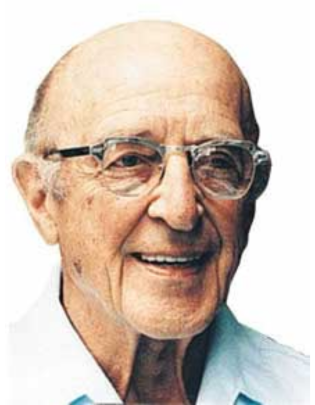
In the 1950s, Rogers proposed a form of therapy that focused on the clients’ experience of themselves, as opposed to the counsellor being an expert and telling them what to do, or what was wrong with them.
Click Here for a podcast on Carl Ransom Rogers, founder of the person-centered approach to counselling.
The therapy relies on the quality of the relationship between the counsellor and the client. This is sometimes called a ‘way of being‘, with the counsellor demonstrating what is known as the core conditions, which form the basis of the relationship.
Person-Centered Theory
Person-centred therapy harnesses the client’s natural self-healing process. Given the right relationship with the therapist, clients can decide what they want to do with their lives.
To this end, person-centred therapy is a personal growth model also known as non-directive therapy. The client is not taught the model of therapy or asked to undertake homework.
Carl Rogers believed that all individuals have the power to live to their own organismic valuing process.
This basically means trusting your own judgement and living your life in line with your own values, rather than with the values of others.
Click to learn about Carl Rogers’ core conditions.
Click to see other contributors to the person-centred theory.
Person-Centered Theory
Carl Ransom Rogers (January 8, 1902 – February 4, 1987) was an influential American psychologist, writer and contributor to educational theory.
With his contribution to psychotherapy research, Rogers is widely acknowledged as one of the main contributors (along with Abraham Maslow and Otto Rank) to what is known as the ‘Humanistic’ School of Psychology or the ‘Third Force in Psychology‘, a phrase coined by Abraham Maslow.

Honoured for his work in 1956 by the American Psychological Association for his groundbreaking research, with the Award for Distinguished Scientific Contributions, Rogers also gained an award in 1972 from the APA for Distinguished Professional Contributions to Psychology.
In later life, Rogers was nominated for the Nobel Peace Prize for his work with differing groups in places such as South Africa and Northern Ireland.
Rogers produced a valuable body of work which includes theories such as:
One of the other terms Rogers ‘coined’ was the ‘organismic self‘, a reference to how an individual uses their thoughts and feelings to develop an emotional picture of who they are. He named this process ‘the internal locus of evaluation‘.
Notice any broken link or issues with this resource? Kindly let us know by email
Email us